Thursday, 7 May 2015

Yum Cha/Dim Sum: A Guide for the First Time Eaters!


Yum Cha is Chinese (Cantonese/Hong Kong) morning or early afternoon tea that involves drinking tea and eating various small dishes that are steamed, fried or baked. How it is served are in bamboo steam baskets or plates, hot or cold (depending on what the dish is) from trolleys.Similarly, Dim Sum is also served during the same time which are collections of small foods that replace breakfast, lunch or tea.


So have you ever tried to go to a Yum Cha restaurant, but then become so overwhelmed with the amount of people, the trolleys and the trolley ladies and the amount of variety on those trolleys, invisible prices? Well fear no more! Here's a very simple guide to how things work.

Step 1:
If you're driving friends or family out to Yum Cha, make sure parking time is long enough (waiting in line can take a while to get a table, especially during weekends since it's generally crowded).
Step 2:
Make sure to let the waiters know how many seats you want for a table (you don't want to get a 2 seat table for 8 people).
Step 3:
You can skip this step and go to the next, or ask for a menu to see what types of dishes you want to try and their prices. The titles of the dishes usually indicate what the dish is made out of.

Step 4:
Wait for a someone with a trolley to come by or put your hand up and wave them over to see what's in their trolley. Pick what you want and the trolley person will put a stamp or write on your bill (white rectangular piece of paper) of what you ordered.


Step 5:
If you want to dip the food in hot sauce/soy sauce/soy sauce with chillies in it/mayonnaise, ask a waiter for it and they will bring it to you (usually it's at no extra charge, but do ask if they do charge just in case)

Step 6:

You'll notice there will be a tea pot with small cups beside. This is the tea that's served with the food, you can drink this anytime during your experience. Waiters will occasionally come by and check the tea and refill it if the tea's running out (once again usually free, but do ask if there's a charge)

Step 7:
Eating is done with chopsticks and a small bowl, but you're certainly not limited to using the utensils, so ask for a spoon and fork.
Step 8:

Once you're done with eating and ready to pay, you can either ask for a waiter and give them the white paper bill (refer to step 4), or you can go up to the reception of the restaurant and pay there

Images taken from:

Info taken from: here
Follow on Twitter: @FoodBlog100

Blog post by: Elizabeth Tran.

うどん: Japanese Udon


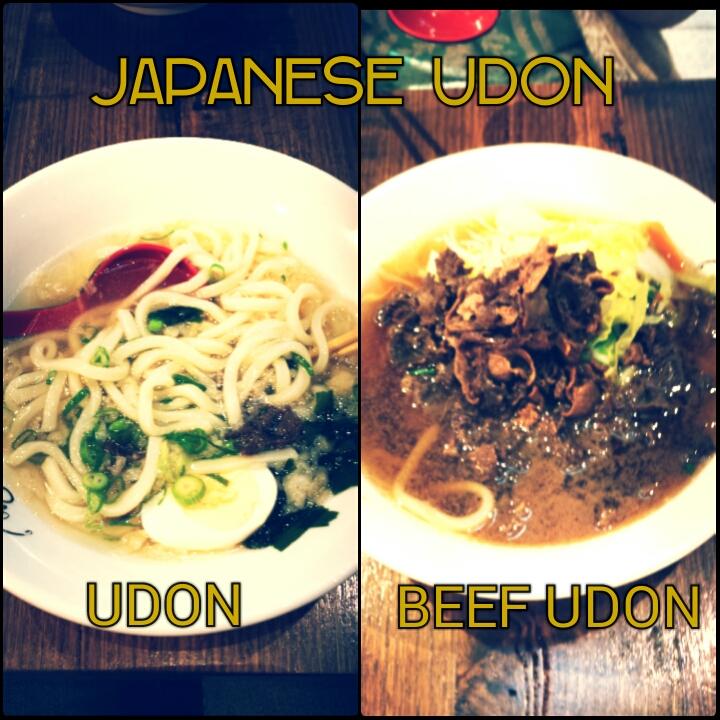
This week, myself and a fellow friend had some delicious Japanese Udon!

So what exactly is Udon? It's actually just the Japanese thick noodles that's made out of wheat flour.
The cuisine itself has the noodles served in a soup broth with toppings. It can be served hot or chilled.

Soup:
  • dashi (soy sauce)
  • mirin
  • seaweed
Toppings:
  • scallions
  • shallots
  • tempura (fried prawn fritter)
  • tofu
  • fish cake
  • 1/2 egg
There are various types of Udon cuisines too as you can see below.

Origins:
There are various stories on the origins of Udon, which most claim to be from China. Here are just a few below:
  1. Edo Period -Enni (Rinzai Monk) introduced the flour milling technology to Japan, leading to making Udon in this period
  2. Nana Period -Japanese envoy brought back various confections from China's Tang Dynasty
  3. Helan Period -Buddhist priest Kukai brought to Japan from studying in China during the 9th Century
If you haven't tried Udon, I highly suggest you do! Don't forget to say 'Itadakimasu!' before you eat!

Sayonara for now! :D


Second image taken from: here
Info taken from: here
Follow on Twitter: @FoodBlog100

Blog post by: Elizabeth Tran.
Sunday, 3 May 2015

Ghormeh Sabzi: Persian stew


Ghormeh sabzi is a traditionally Persian dinner which has deep historical roots going back 500-1000 years. It is essentially a slow cooked stew which can take upto 8 hours to cook. The meal consists of various elements including red kidney beans, sauteed greens, tumeric and lamb.

Two various additions to this dish can include: limo omani (dried lemons) and shamballieh (dried fenugreek leaves). It is also important to note depending on which region you are from Iran, their is a variation that can be made to the dish to acclimate to the weather and produce in season.

For an indepth recpie of the dish, head to:
www.food.com/recipe/ghormeh-sabzi-persian-green-stew-313055

Saturday, 2 May 2015

Baklava: Classic Greek Phyllo Pastry Dessert


 - Photo © Lynn Livanos Athan


Baklava is the dish most people think Greek dessert. Baklava is a perennial favorite, a classic Greek pastry made with flaky phyllo dough that is layered with a cinnamon-spiced nut filling, and bathed in sweet syrup. It's crunchy and sweet and very decadent. Recipes are known to be passed down from generation to generation in different families, with slight variations in some ingredients used. 

Be sure to check out one of the best Baklava recipes around here:

http://greekfood.about.com/od/phyllopastriesbaklava/r/Baklava-Classic-Phyllo-Pastry-With-Walnuts-And-Almonds.htm

Friday, 1 May 2015

Phở: Vietnamese Noodle Soup


Pho originates from Northern Vietnam in the city of Hanoi. It consists of a soup broth, bánh phở (rice noodles), meat and herbs, that are mixed with chili sauce, hoisin sauce and lemon.

It's a popular street food in Vietnam that's also served in restaurants. Despite its popularity it is eaten at different times of the day depending on the region you're when in Vietnam. For example, Southern Vietnamese consume either consume it between breakfast and lunch only. Whereas, Northern Vietnamese consume it at anytime. This was the case for me when I was travelling in Vietnam, so make sure to probably not go later than 1pm to eat Pho in South Vietnam.

Also, it is now popularised globally and there can be a slight variation between countries. For instance, in the USA the rice noodle isn't linguine-shaped; it's quite thin in comparison to Vietnam where it's linguine-shaped (which is the case here in Australia).                       

There are also different Pho recipes in chicken and vegetarian, which taste just as good as the popular beef Pho.

So go ahead and give it a try if you haven't already or if you have you'll probably become a Pho King by now. It should be great to enjoy especially in these rainy weather conditions that's been going on for days here in Sydney.

Pho Recipe
Beef Noodle Soup (Pho) Recipe
Info taken from here
Follow on Twitter: @FoodBlog100

Blog post by Elizabeth Tran.

Wednesday, 29 April 2015

Tom Yum Goong: Spicy Thai Soup


Tom Yum Goong is a spicy shrimp soup that originates from Central Thailand and is widely served in neighbouring countries such as Cambodia, Brunei, Malaysia and Singapore.

A blend of fragrant lemongrass, chili, galangal, lime leaves, shallots, lime juice and fish sauce is the foundation for the classic soup whilst fresh prawns and straw mushrooms lend it body.

Tom Yum Goong is a delicious journey into traditional Thai cooking as the sour-spicy-hot taste leaves you wanting more.

You can find a full recipe and directions for preparing Tom Yum Goong and the following link:


Tom Yum Goong Image taken from:


Monday, 27 April 2015

Pastitsio: Traditional Greek Baked Pasta


Pastitsio is a Greek and Mediterranean baked pasta dish including ground beef and bechamel sauce in its best-known form.

The typical Greek version has a bottom layer that is bucatini or other tubular pasta, with cheese and egg as a binder; a middle layer of ground beef, veal or lamb with tomato and cinnamon, nutmeg or allspice; another layer of pasta: and a top layer of sauce, varying from an egg-based custard to a flour-based Bechamel or a Bechamel with cheese. Grated cheese is often sprinkled on top. Pastitsio is a common dish, and is often served as a main course, with a salad.

A link to a classic Greek pastitsio recipe can be found here: http://realgreekrecipes.blogspot.com.au/2008/11/greek-pastichio.html